The History of the Catholic Church in Rutherglen

The story of the Catholic Church in Rutherglen dates back over fourteen centuries.  Since that time, four Catholic church buildings have been established on or near the present site, details of which are outlined below. 

Details of Clergy who have served the parish over the decades will be provided here in time.

The publications shown below provide much more detailed information on the history of our parish community.

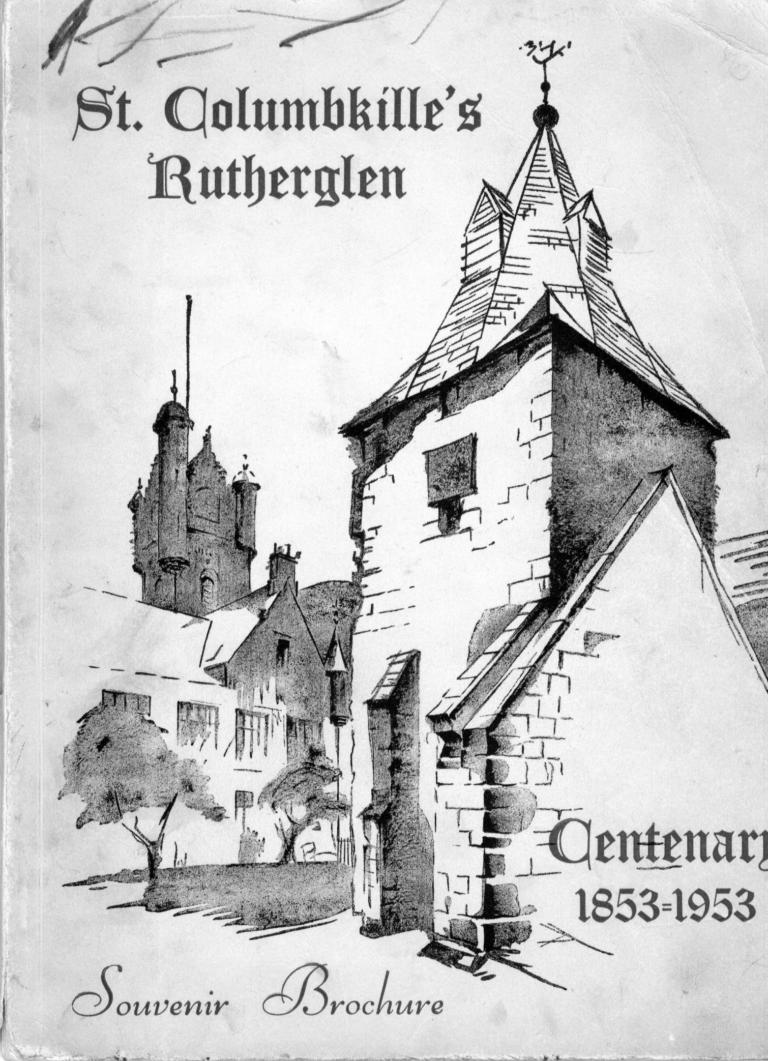
Centenary Souvenir Brochure 1953

In 1953 a "Centenary souvenir brochure" was published to mark the life of the parish in its first 100 years. Its publication coincided with the demolition of the previous church building which had been opened in 1853. Clicking on the brochure title above will open a link to the brochure which is online.
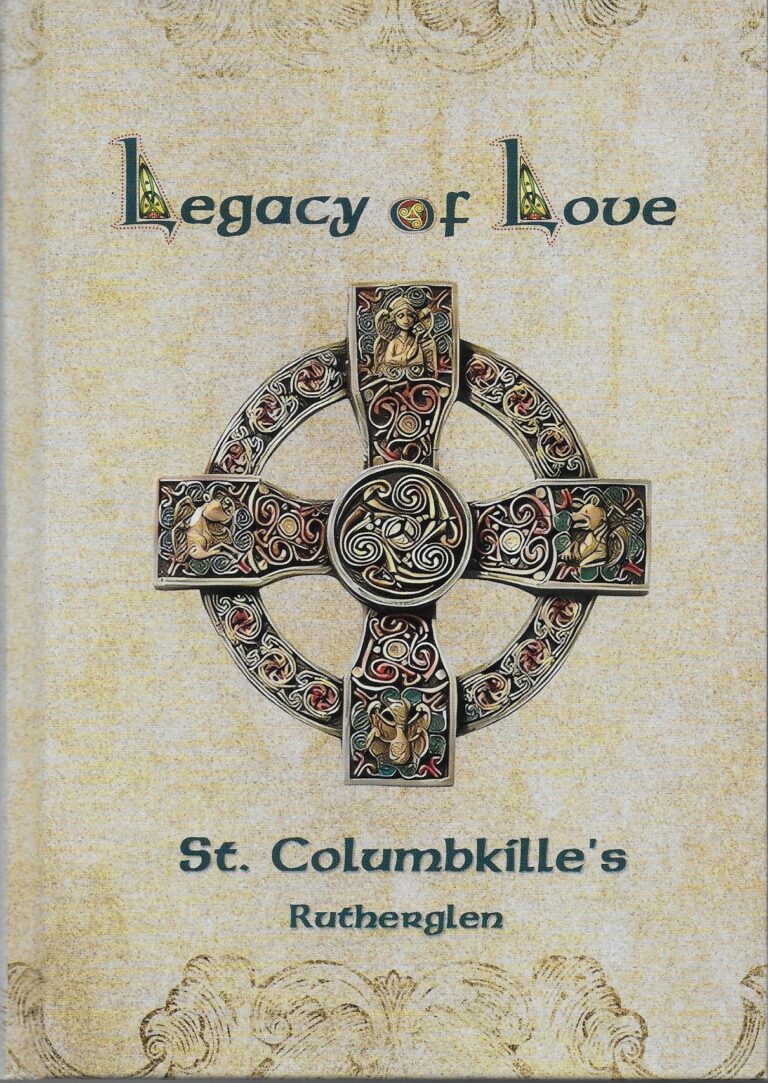
Legacy of Love 2025

In 2025, a Parish History Group published the book LEGACY OF LOVE which provides an interesting social history of St Columbkille's Parish.  Copies are available from the parish office.
Church of St Conval

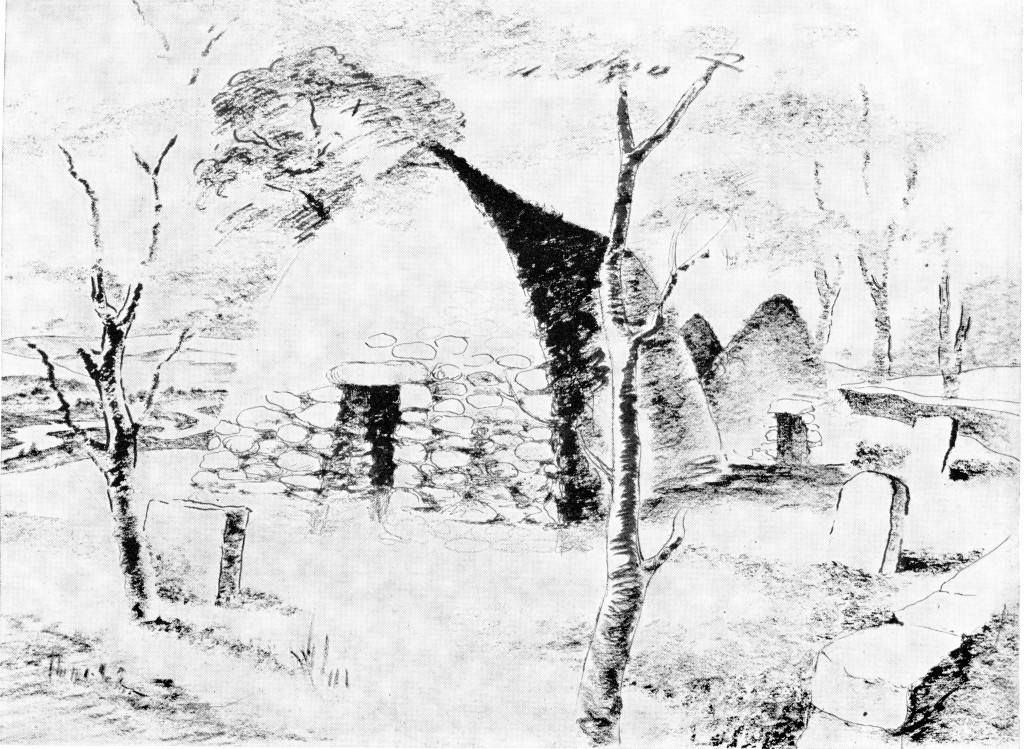
St Conval was a follower of St Ninian who had first brought the Gospel to Scotland.  Like Columba he had come from Ireland and he worked as disciple of St Mungo (Kentigern) to establish the faith among Druid tribes in the Glasgow area.  Eventually the first church  - probably a wattled structure made of plaited twigs - was established on the site of the present Parish Kirk and graveyard in Main Street.  In the five centuries after Conval's death, Scotland was immersed in warfare among rival kings and Norse invasions.  By 1126, in the reign of King David, Rutherglen had emerged from the darkness of these times to become the most considerable town between Ayr and Lanark and the first Royal Burgh of Scotland, with the Church taking central place in the town.

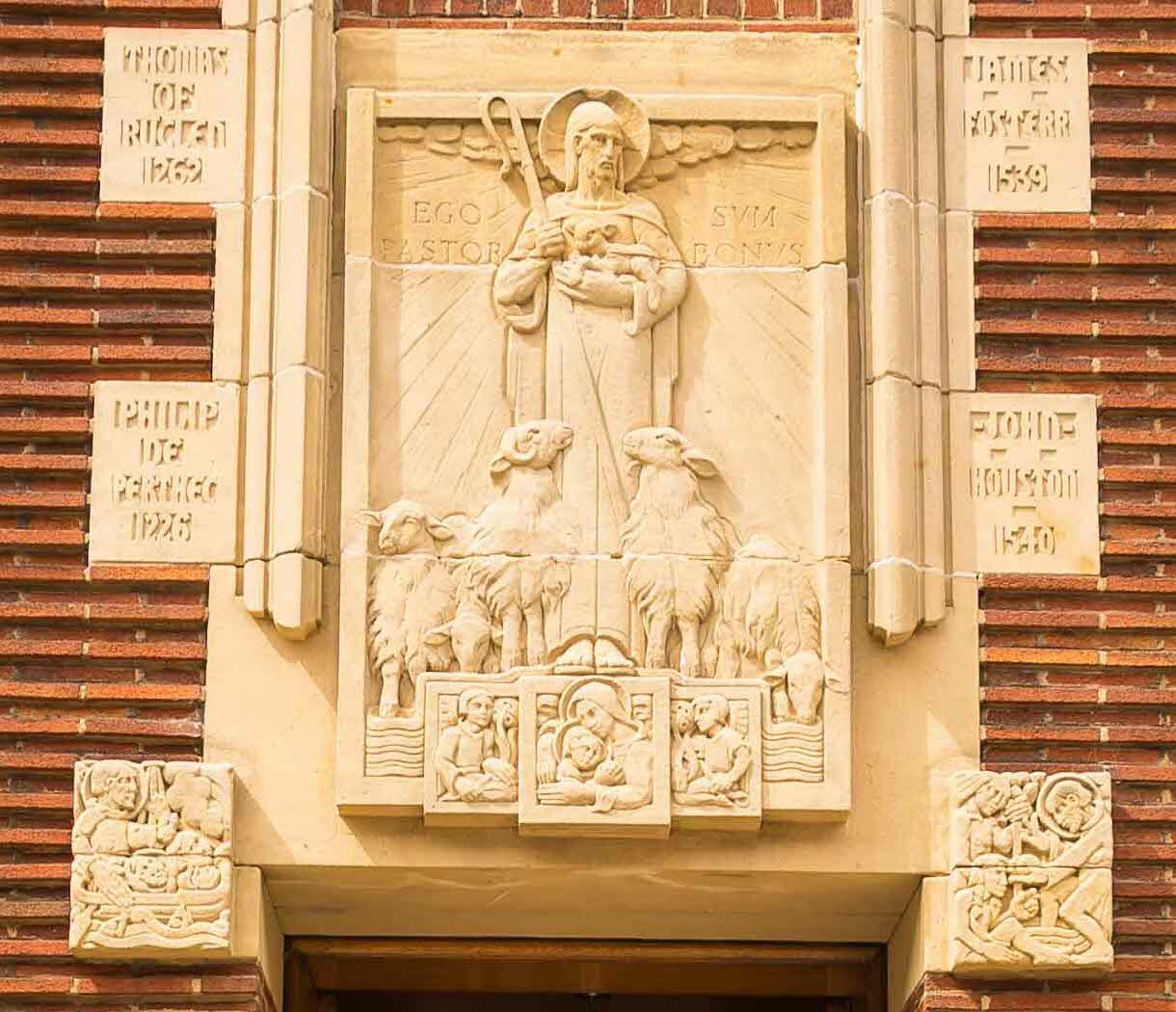
In 1189 the church in Rutherglen was "appropriated" to Paisley Abbey.  Over the centuries the Rutherglen parish was governed by a number of "vicar" priests, appointed by Paisley Abbey.  Some of their names can be seen carved above the current Presbytery door: Philip de Perthec 1226, Thomas of Ruglen 1262, James Fosterr 1539 and Hohn Houston 1540.  The last pre-Reformation priest was Matthew Fleming.
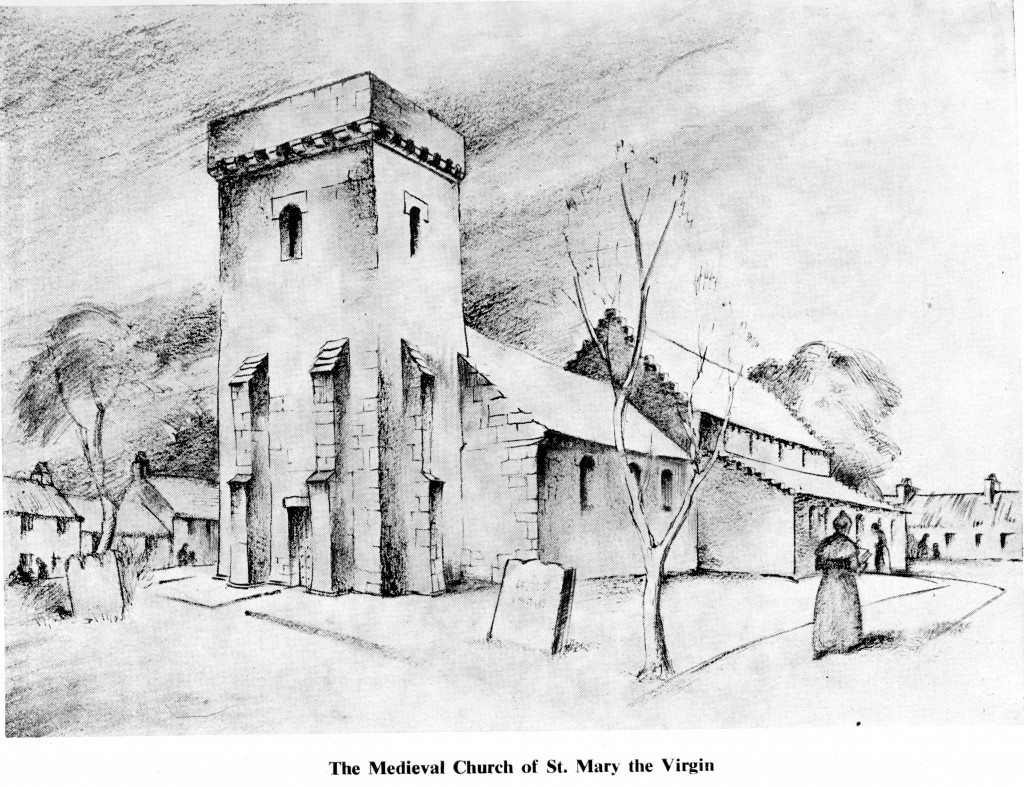
Mediaeval Church of St Mary the Virgin

Mediaeval Rutherglen was a market town in which goods from the countryside were sold and tolls were levied on all goods sold within a wide area from Maryhill to Eaglesham, Lesmahagow and Linlithgow. Glasgow was within the area of Rutherglen and very much subservient to it at this time.  It was a King's town with its own castle where the King stayed yearly. In the 12th century  one of the most important Norman Churches in Scotland was built on the site of the original church of St Conval.  Named as the Church of St Mary the Virgin, it survived until 1794.

 St Columbkille's Parish 1851

St Columbkille's Parish was founded in 1851 to care for the needs of many people coming to Glasgow from the Highlands and from famine-torn Ireland.  They were seeking work and opportunities to raise their families. They founded this parish community and built a church and a school.  The original church was opened in 1853, situated to the east of the present church and accommodated 600 people.
In the following decades, as the Parish grew, so did the need for a bigger church.  Therefore in the 1930s the people of the parish, together with the priests, embarked on fund-raising efforts to re-build the church, prior to the beginning of World War II.

New St Columbkille's Church 1940

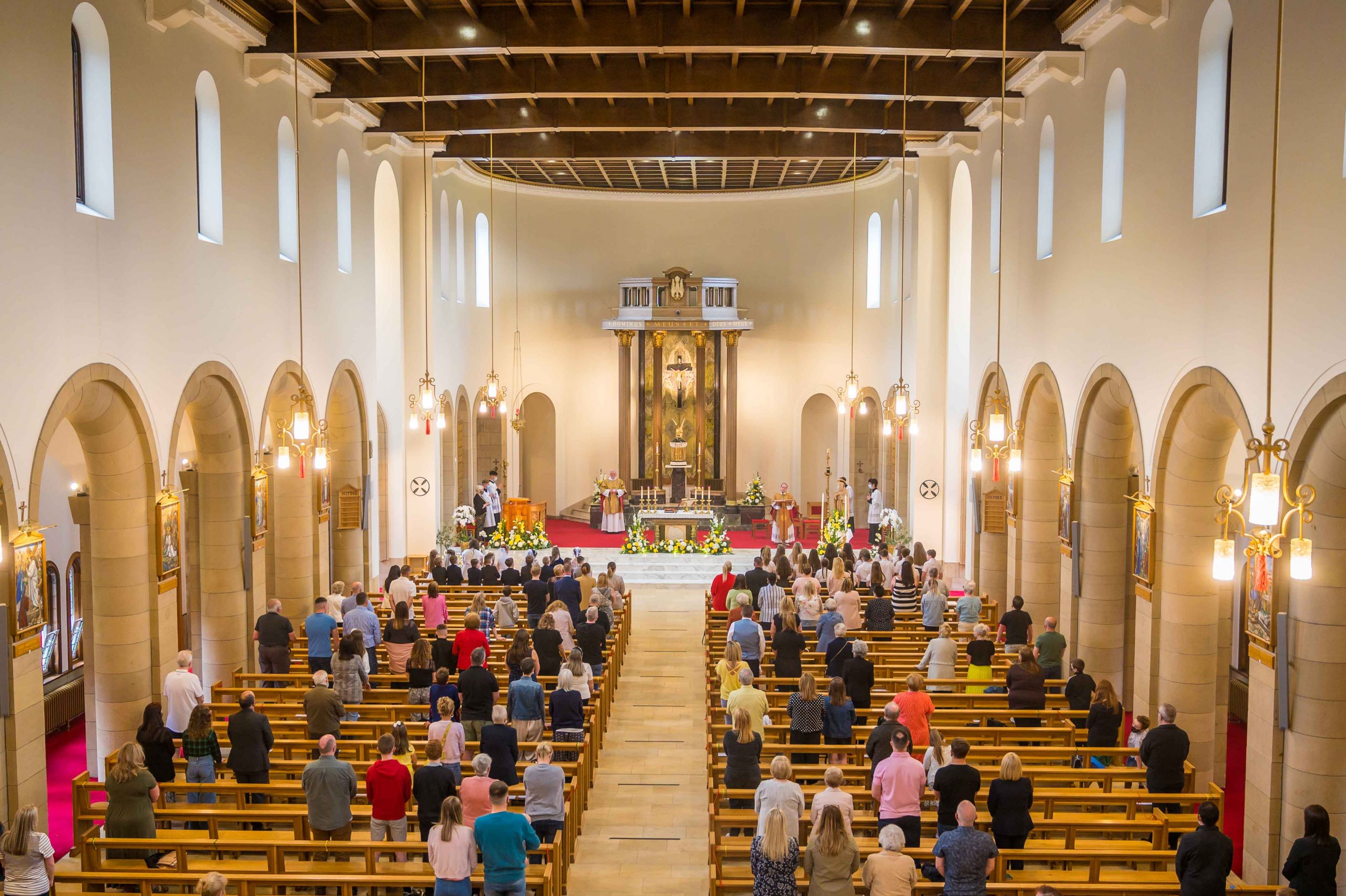
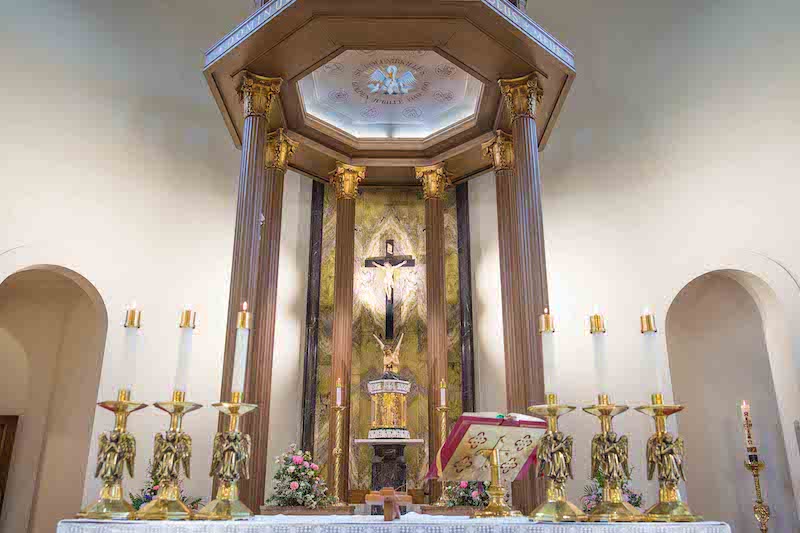
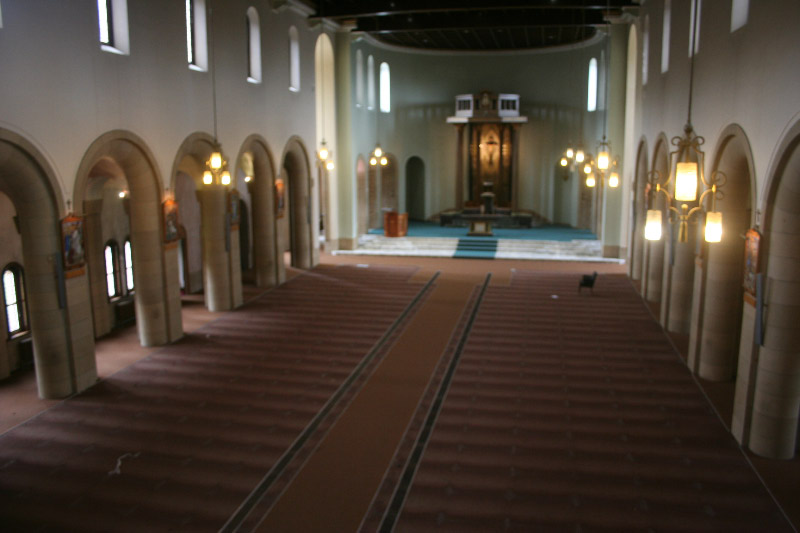
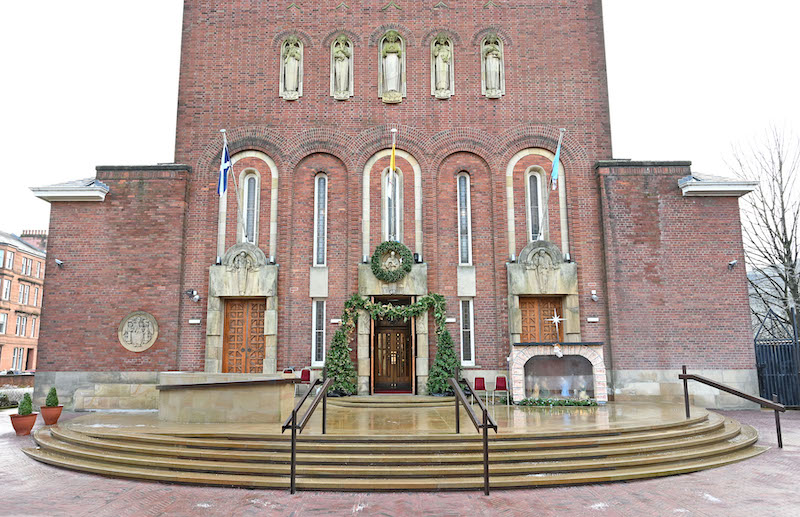
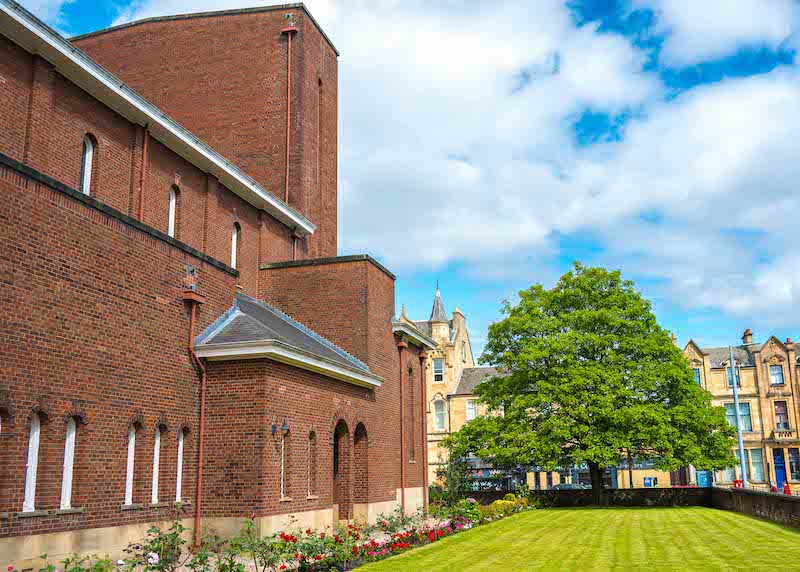
The 1940 church building was designed by renowned architect G.A. Coia, with a capacity of 1,000. It is an A-listed building , distinctive in scale and design.
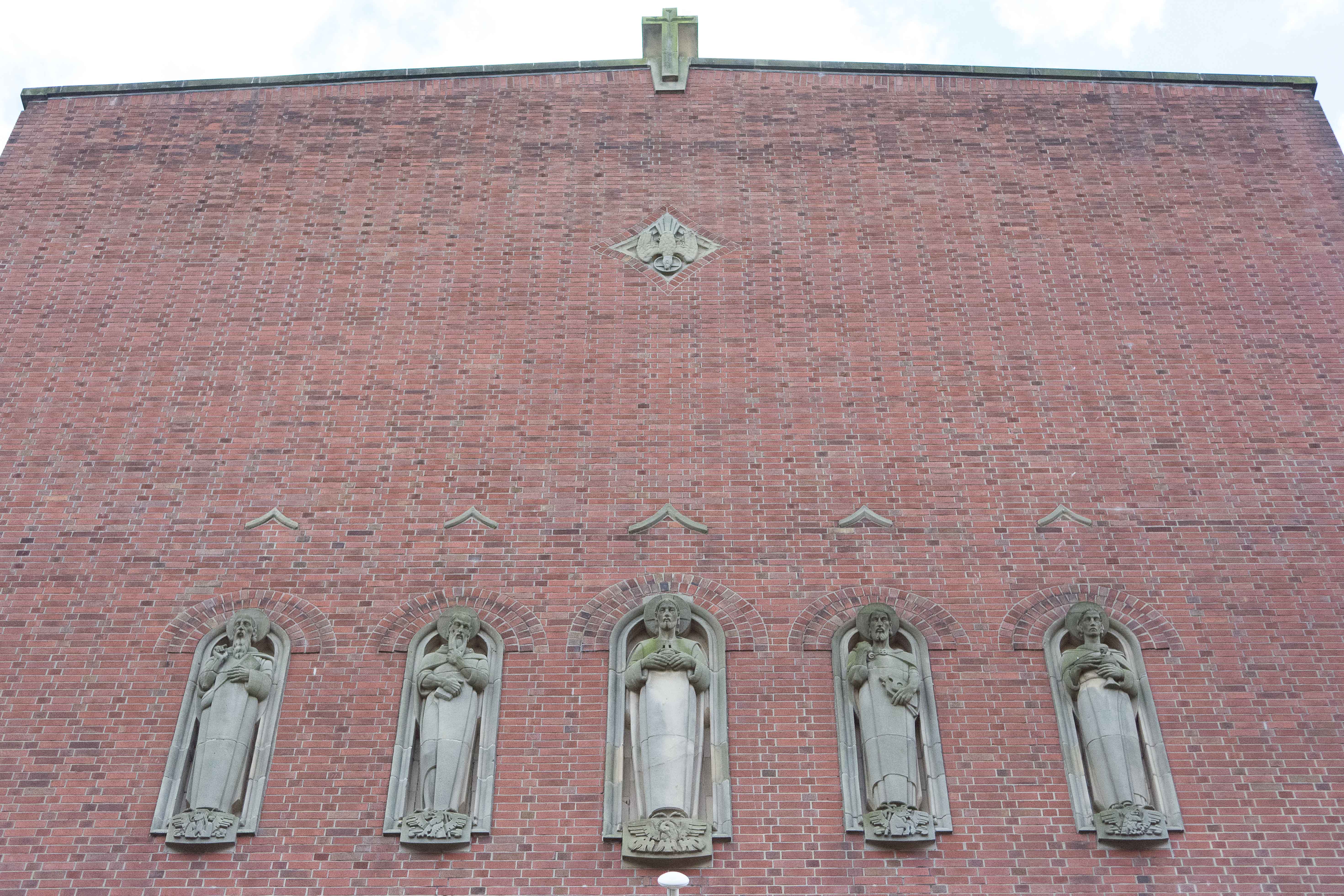
The front exterior shows the sculpted figures of Jesus and the four Evangelists, together with the dove of the Holy Spirit.  St Columba and his monk companions are displayed in bas relief above the doors.
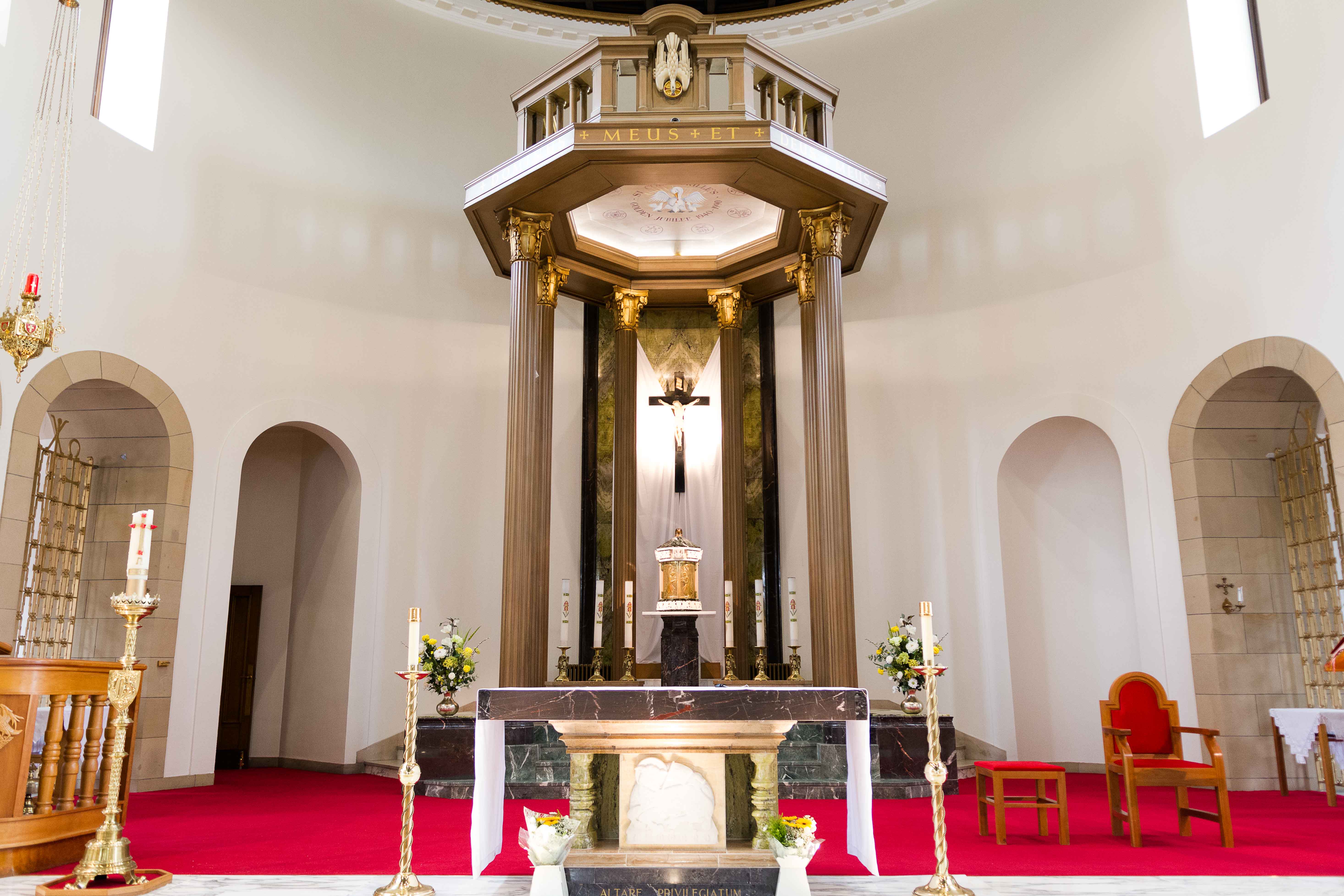
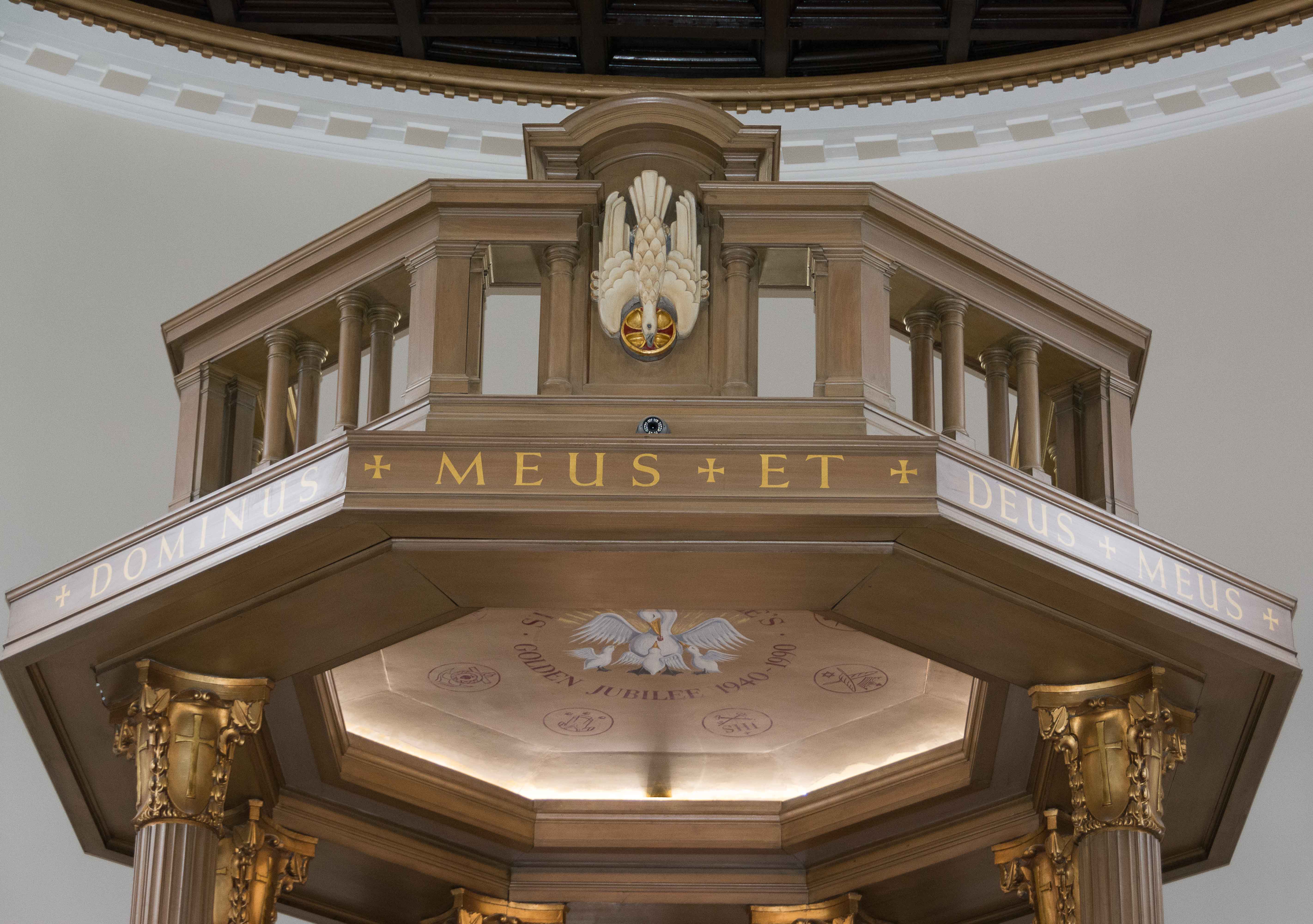
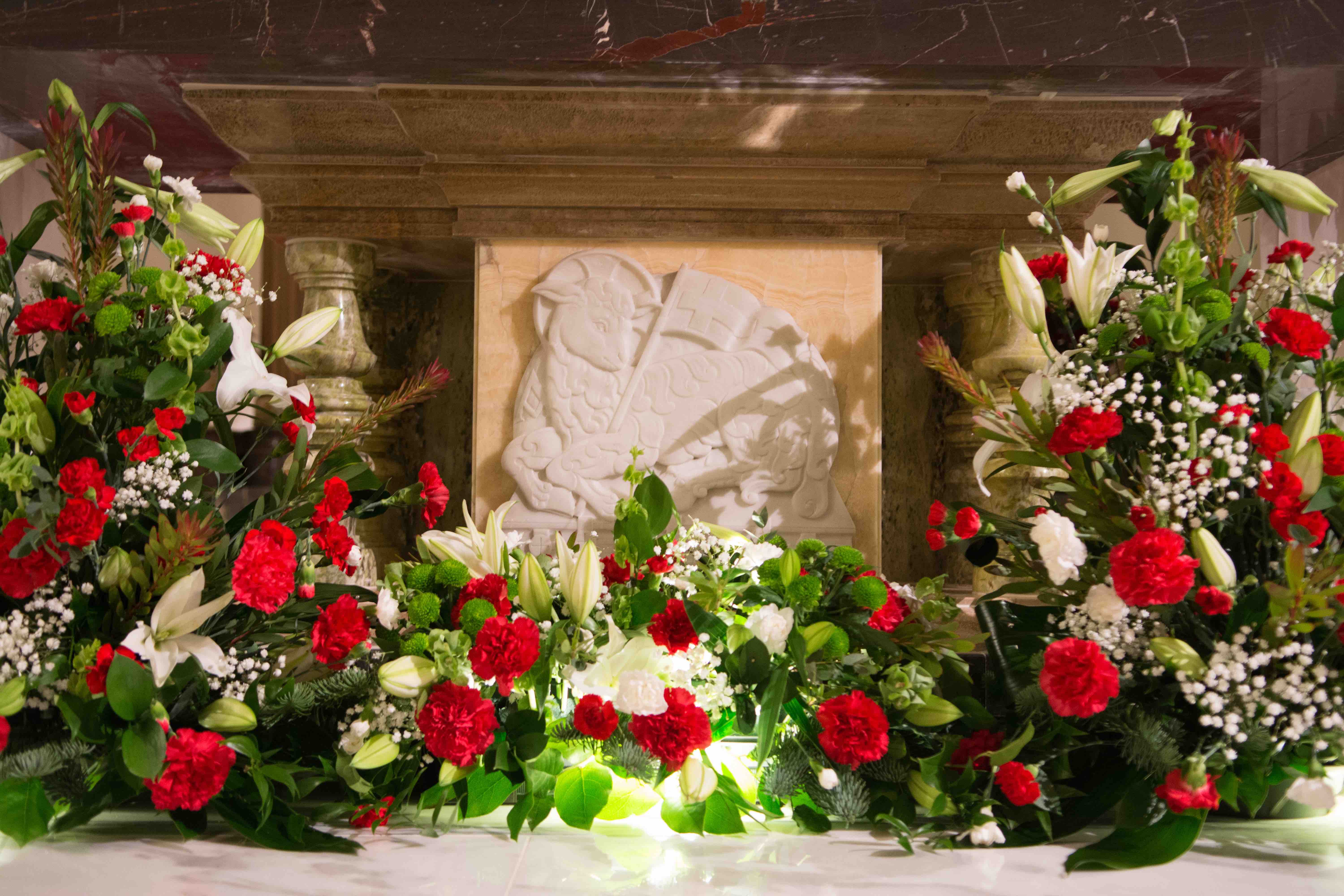
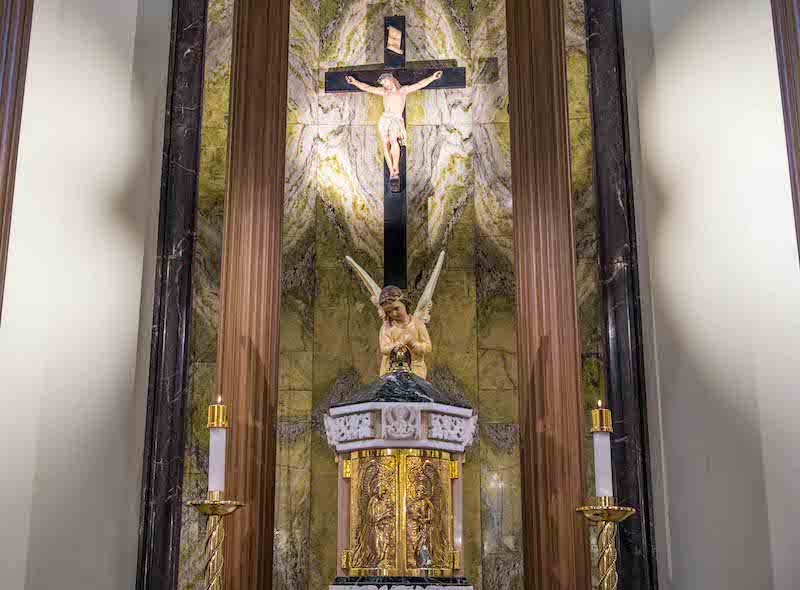
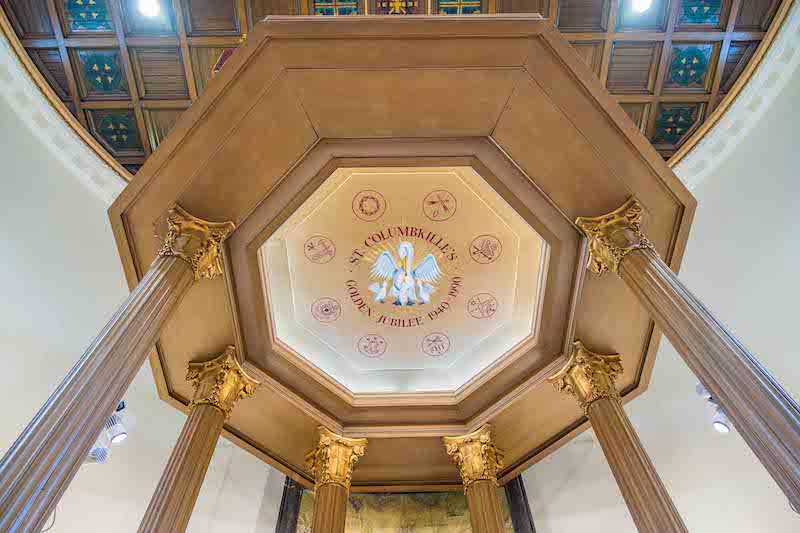
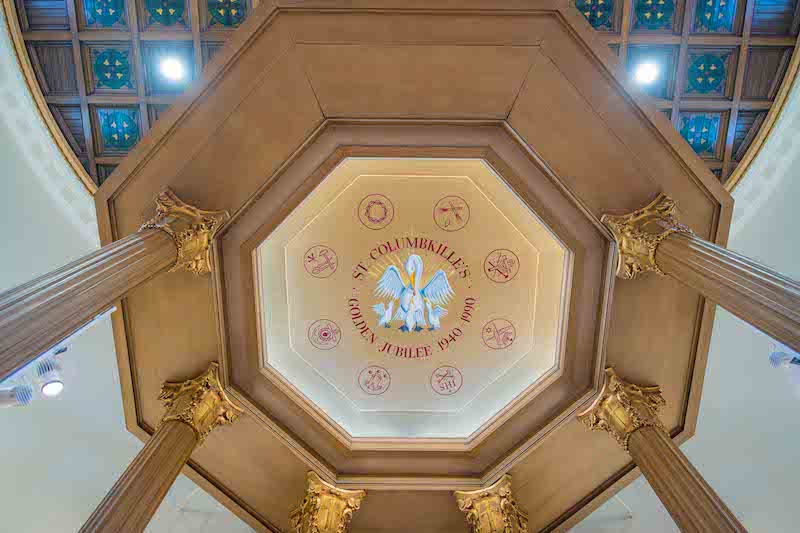
Inside, the ceiling is made of Austrian oak, as is the Baldachino which soars from the sanctuary floor above the tabernacle towards the ceiling. The altar, which was originally set underneath the Baldachino prior to liturgical changes that emerged from the Second Vatican Council, is made of onyx and green marble and the Reredos on the back wall behind the crucifix is made of Connemara marble.

FRESCOES – CEILING PAINTINGS IN THE SIDE CHAPELS

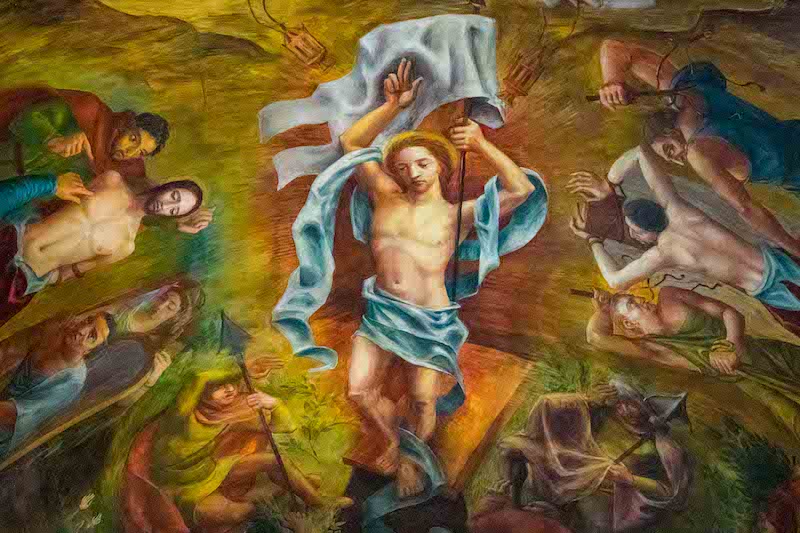
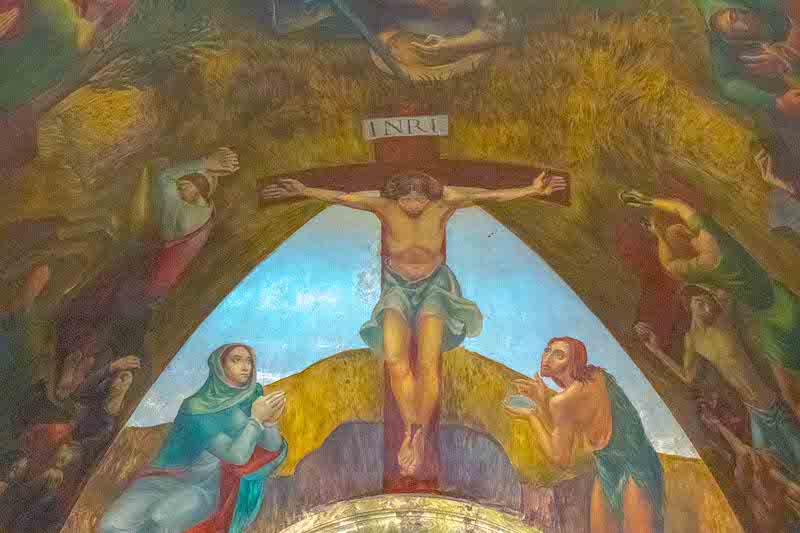
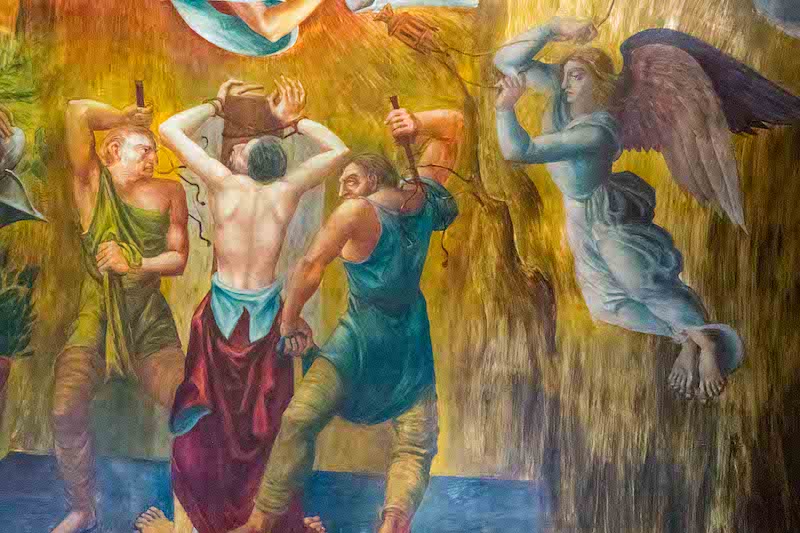
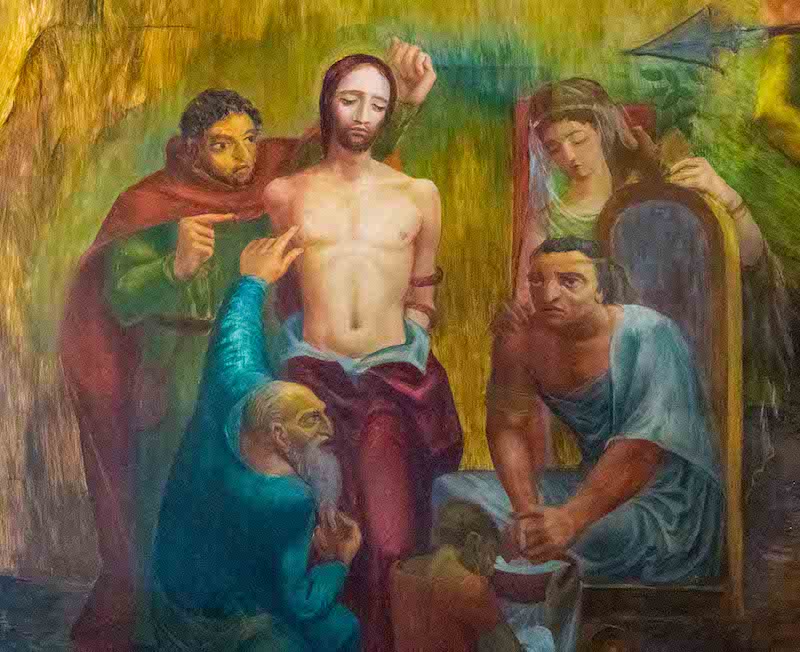
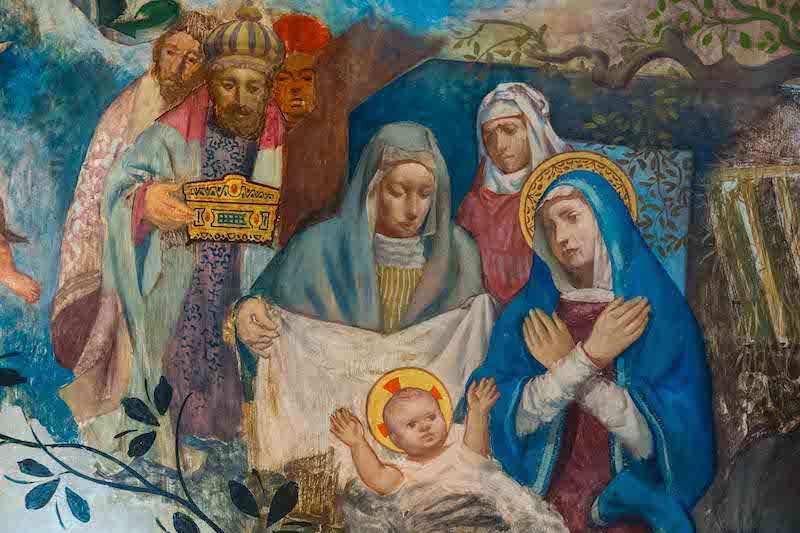
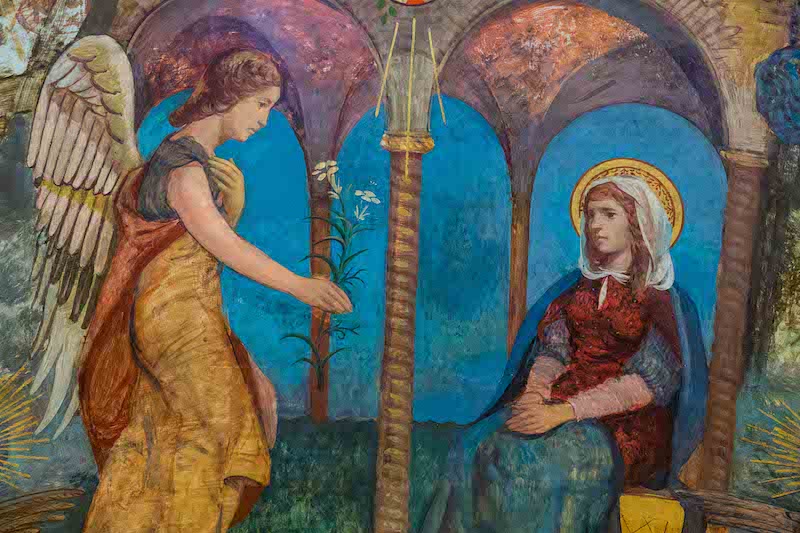
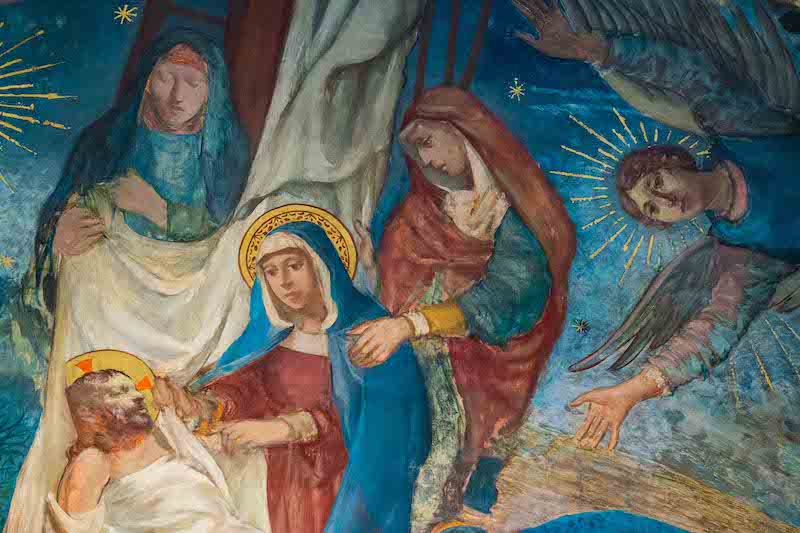
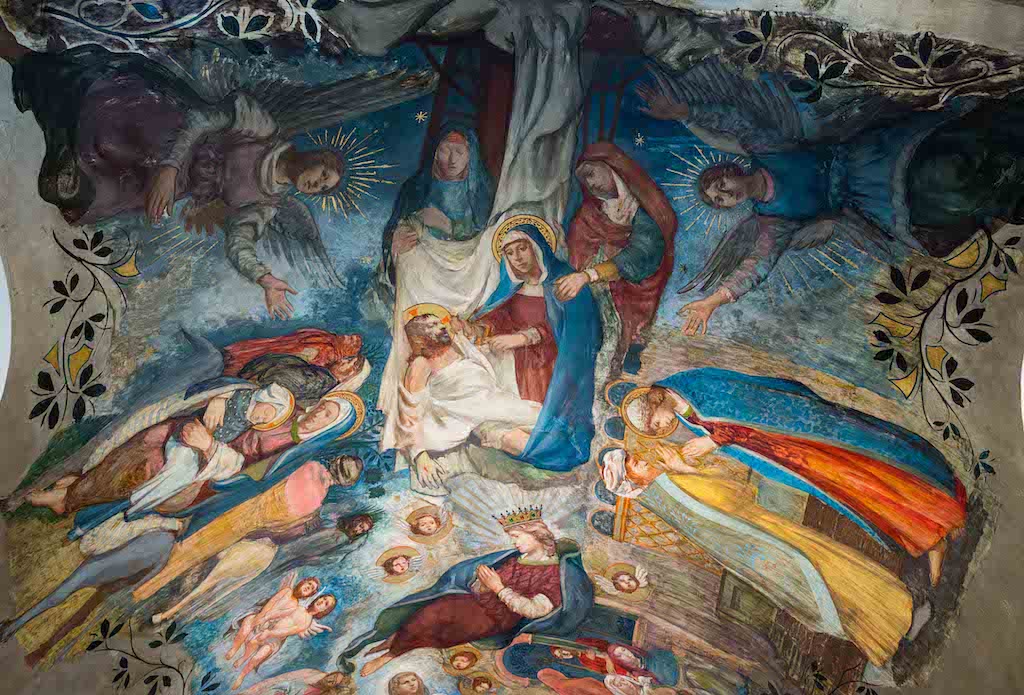
In 1952 two fine modern artists, Mr. Walter Pritchard, of the Glasgow School of Art, and Mr. Wm. Crosbie, A.R.S.A., decorated the roofs of the side-chapels.  In 2020, restoration work was carried out both to preserve the paintings and to restore them some of their original lustre.

SACRED HEART CHAPEL

Mr. Pritchard, in an account of his work in the Sacred Heart Chapel, says that his subject is the Agony, Crucifixion and Resurrection of Our Lord. “The colour scheme is based on the liturgical colours of the Sacred Heart, red and gold, and from the glowing figure of the resurrected Christ which dominates the crown of the vault, the colour deepens to darker and more sombre tones in the various events of the Passion which are depicted in the spandrels between the arches. The spire of the vault shows the risen Christ carrying the banner of the Resurrec­tion. His grave clothes are falling from His glorified Body back into the tomb; the guards are stricken with terror. The painting is executed in glazed oil-paint on an aluminium-leaf ground, the metallic lustre of the aluminium giving a rich glow to the thinly applied layers of colour.”

LADY CHAPEL

Mr. Crosbie described how, in his work on the ceiling of the Lady Chapel, he depicts eight aspects of Our Lady’s life, from her Presentation in the Temple to her Coronation in Heaven. ” A ground of metal foil was first laid to secure protection from plaster reactions. Superimposed is an oil painting applied in the late Renaissance technical manner, involving solid and glazed painting with gilding and final drawing, giving the maximum solidity and durability without having to employ the fullest range of tone, avoiding undue heaviness, the final stage being a sealing of varnish to withstand atmospheric contamination.”

Renovations

Since being opened in 1940, the church building has undergone various internal renovations, some structural and others decorative.  Some, such as the moving of the altar from underneath the Baldachino towards the front of the sanctuary, resulted from liturgical changes that emerged from the Second Vatican Council.  Ahead of the Golden Jubilee of the church building in 1990, the interior of the building was re-painted.

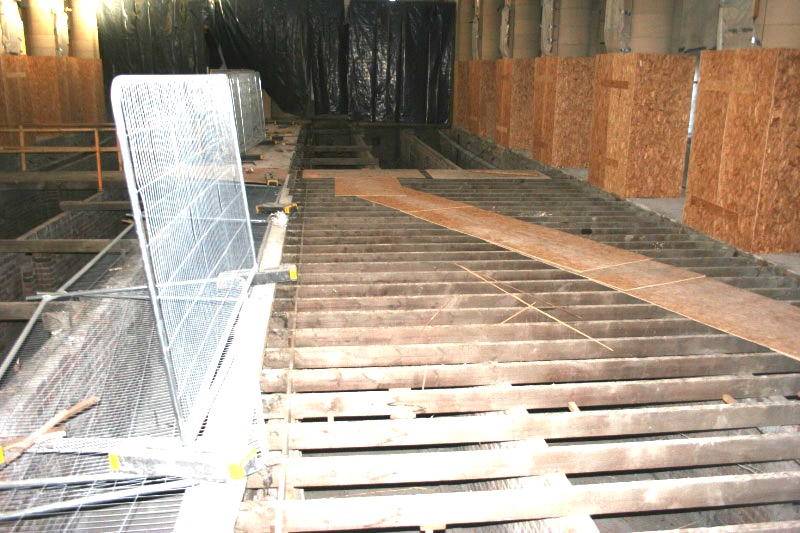
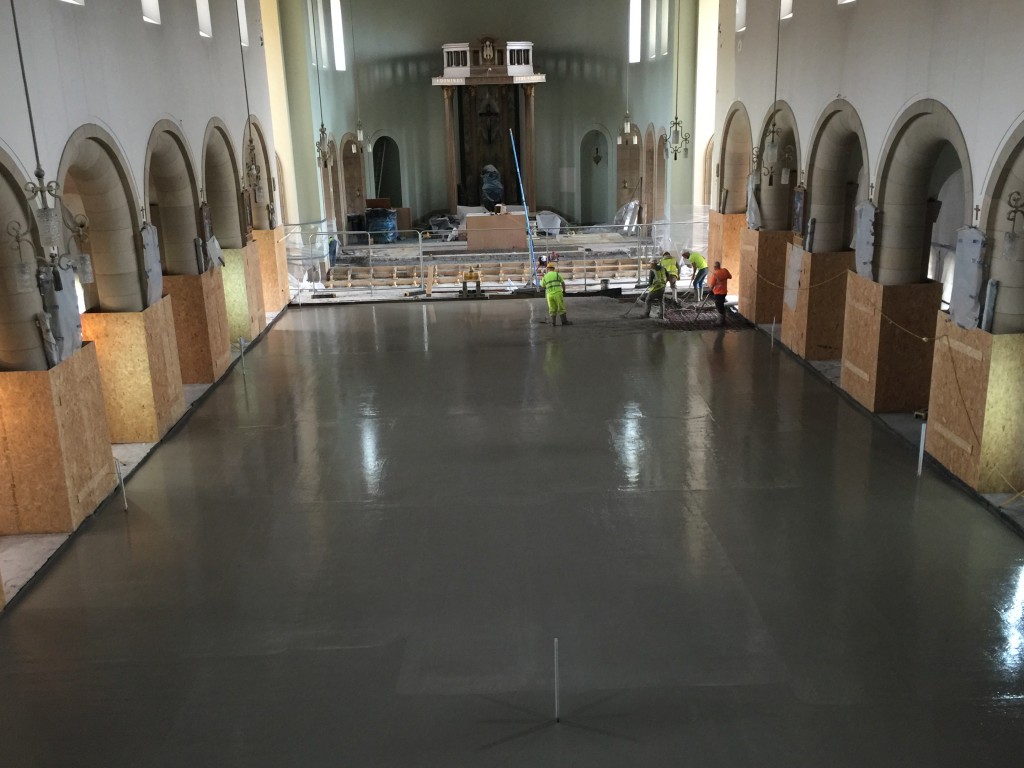
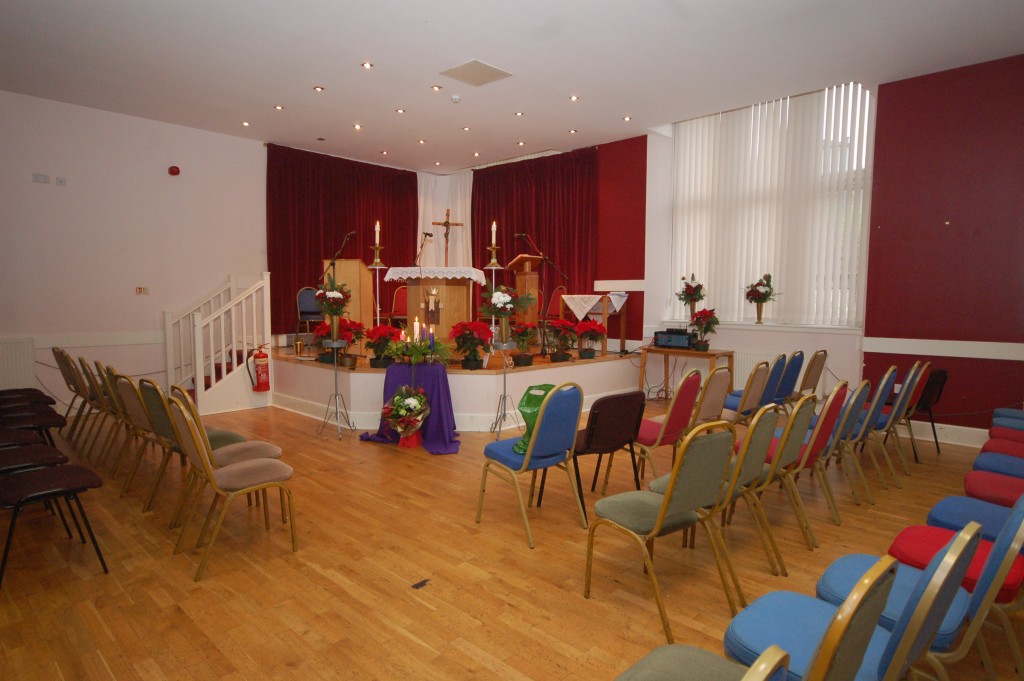
In 2014 it was deemed necessary to undertake significant building works over two main phases, including: firstly, external structural repairs to the roof and building exterior, followed by internal refurbishment & redecoration, including new heating and lighting.  During these renovations, over a three-year period, the Parish Hall was used for daily and weekend Masses until the building re-opened in 2017.


New Piazza entrance

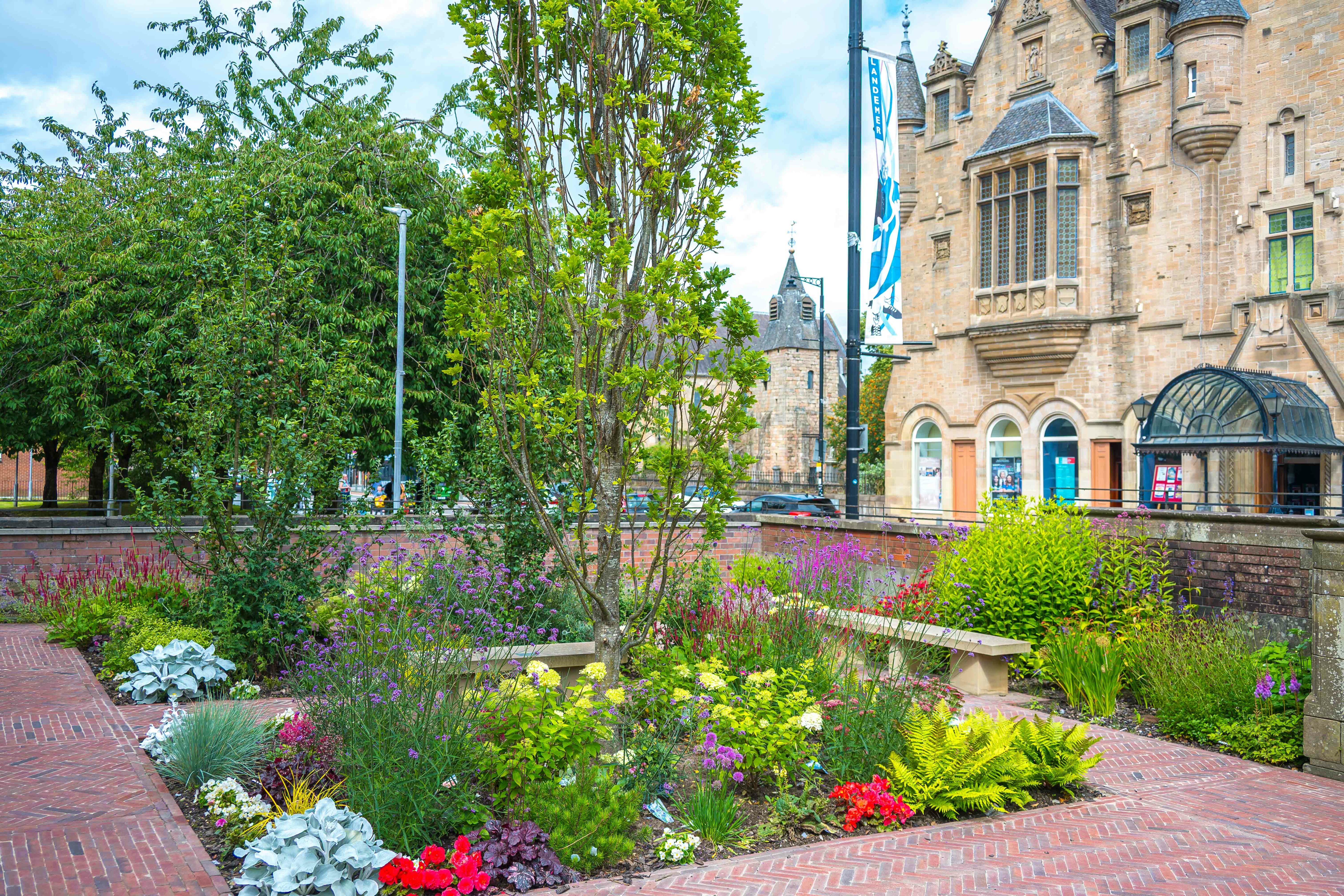
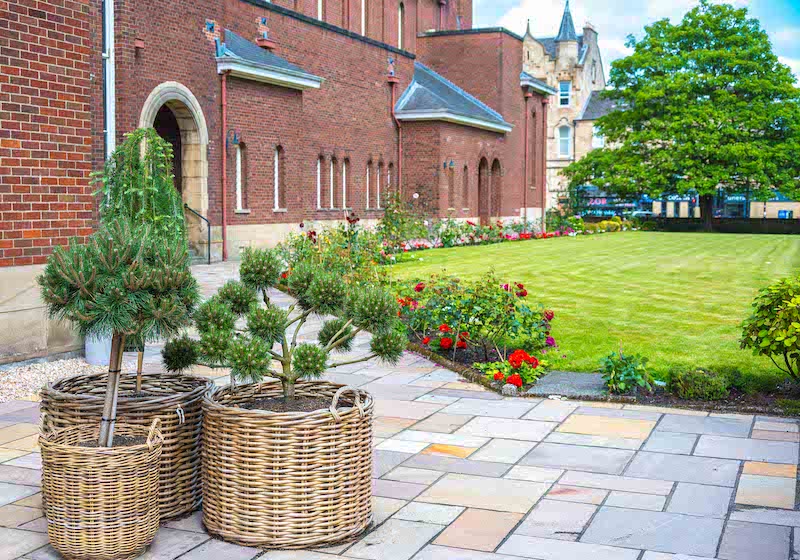
In 2024, the entrance to the church from the main street, together with the side path towards the Parish House and the Parish Hall, were re-designed to ensure safe access to the building.  (Where possible, the original flagstones were re-used.)